CONNECTIVITY ATLAS / ATLANTIC
Atlantic Connectivity
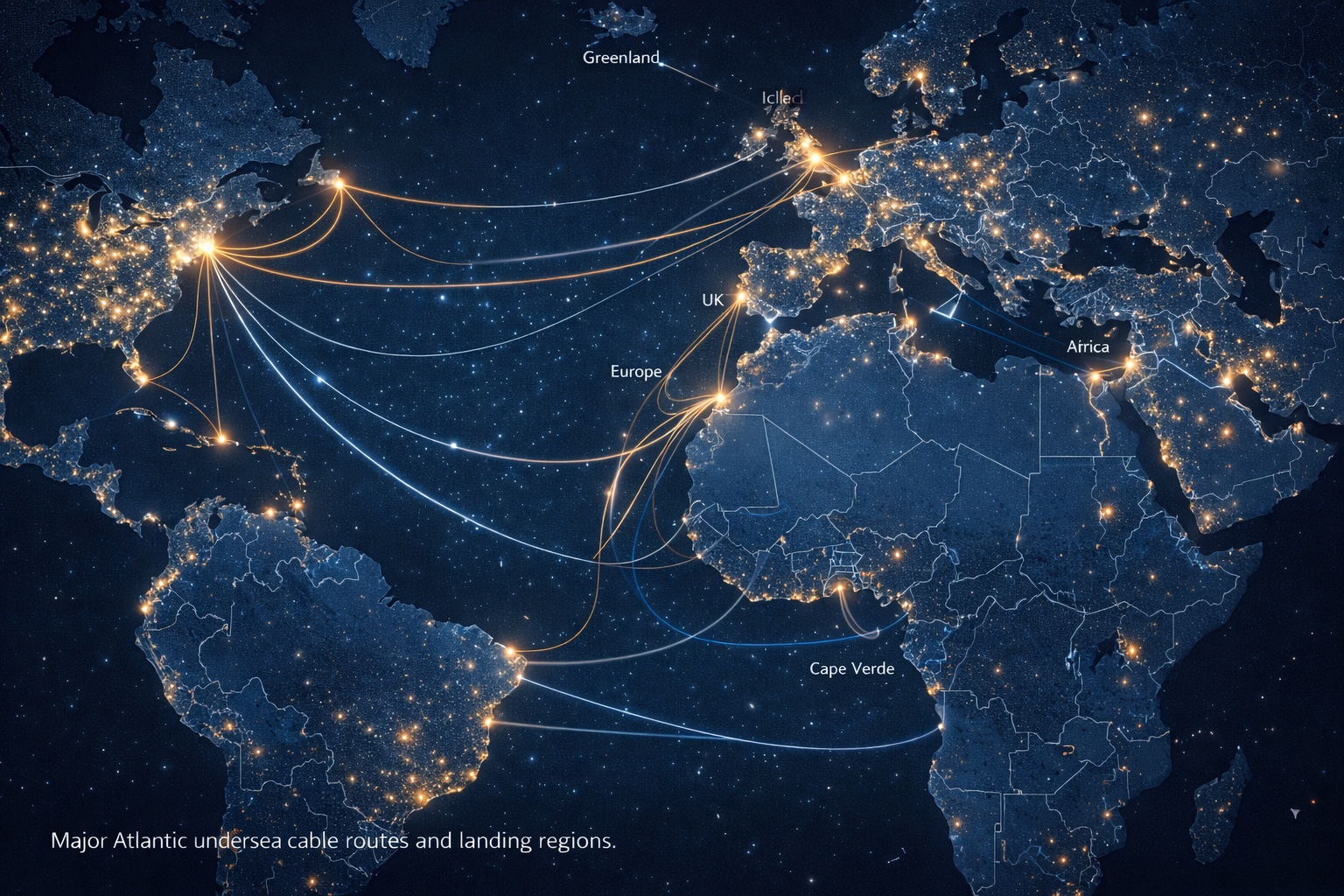
Undersea fiber-optic cables form the physical backbone of global artificial intelligence. Across the Atlantic, these cables connect North America, Europe, Africa, and island regions, shaping where low-latency compute can realistically operate.
Why the Atlantic Matters
AI infrastructure is increasingly constrained by latency, redundancy, and energy availability. Atlantic cable routes concentrate bandwidth into specific coastal and island regions, quietly defining where scalable AI systems can function efficiently.
Regions with dense cable landings gain structural advantages: faster data exchange, improved redundancy, and closer proximity to multiple economic zones. These advantages compound as AI workloads grow.
Geographic Implications
Connectivity alone is not sufficient. However, when undersea cable access is paired with reliable power, political stability, and physical security, certain regions become natural candidates for advanced AI infrastructure.
GridSignal monitors these convergence points to understand how global compute capacity reorganizes itself over time.